Water Line Repair in Littleton, CO
The main water line is the one pipe your whole house depends on — the buried line that runs from the city connection at the street to your home. When it fails, the symptoms are house-wide: pressure drops at every faucet, the water runs discolored, or a soggy patch appears in the yard that never dries. In Littleton, these lines face the foothills' double stress — freeze-thaw cycles in the soil above them and the ground movement that comes with it.
Main line failures are usually age or pressure doing slow work: corrosion thinning the line over decades, a joint stressed by shifting soil until it lets go, or tree roots finding the moisture at a fitting and prying it open. Because the line is buried, the first job is locating the failure precisely — digging in the wrong place turns a repair into an excavation project.
Your provider will lay out the real options: a spot repair where the failure is isolated and the rest of the line is sound, or replacement of the line (often trenchless, pulled through the old path) when the pipe's overall condition says a spot fix would be the first of several. Which is right depends on what the line is made of and what condition it's in — and you should hear the reasoning either way.
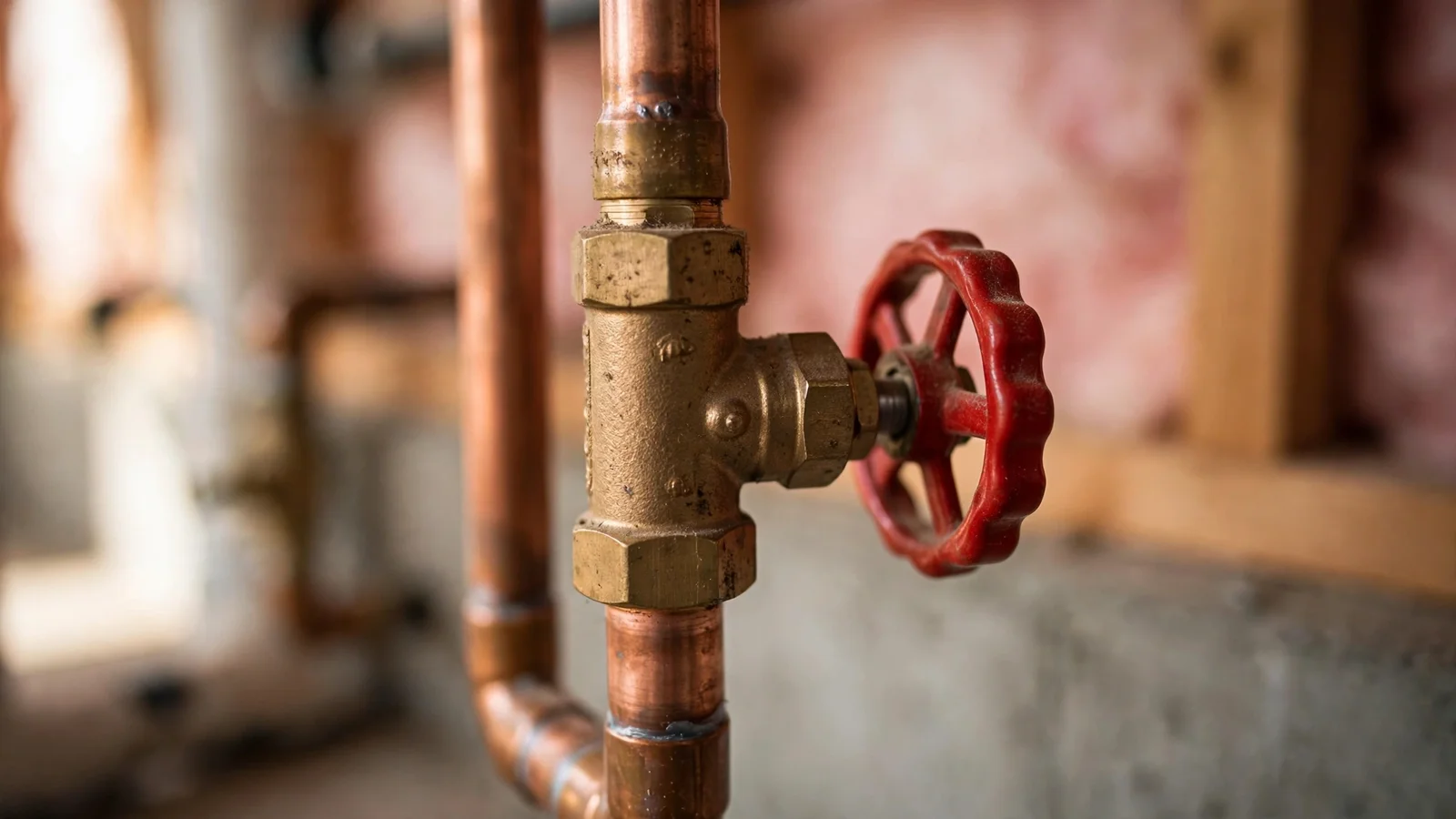
Signs your main water line is failing
- Low water pressure at every faucet in the house at the same time
- A patch of yard that's always soggy, or grass that's suspiciously greener in one strip
- Water that runs rusty or discolored, especially after sitting unused
- A water bill spike with no leak found anywhere inside the house
- Hissing or running-water sounds near where the line enters the home
- Puddles at the curb or near the meter box that don't dry out
How your provider repairs a water line
1. Rule out the house first
Your provider confirms the problem is the main line and not an inside leak or the city's side of the connection — checking pressure, the meter's behavior, and the shutoffs. The stretch between the meter and the house is the homeowner's side, and that's where the work focuses.
2. Locate the failure before digging
Acoustic listening and pressure testing narrow the failure to a section of the run. Utilities get marked before any excavation. The smaller the dig, the smaller the restoration afterward.
3. Repair or replace — with the reasoning
An isolated failure in a sound line gets a spot repair. A line that's corroded along its length gets the replacement conversation, including trenchless options that pull a new line through the old path without trenching the whole yard.
4. Test, backfill, restore
The repaired or new line is pressure-tested before anything is buried, then the excavation is backfilled and the surface restored as agreed. You get a clear account of what was done and where.
Water lines in Littleton
Littleton's main lines carry the marks of the town's growth eras: older streets near downtown still run original lines from mid-century installs, while the southern subdivisions have newer materials but longer runs through expansive, shifting soils. The foothills climate adds frost depth to the equation — lines and fittings that sit too shallow feel every freeze-thaw cycle — and mature trees across the older neighborhoods put roots into any fitting that weeps. Local plumbers know which streets run which materials and how deep the frost reaches here, which shapes both the diagnosis and the repair plan. Depth is the other local variable. Front Range frost commonly reaches about three feet down, and Denver-metro water lines are typically buried around four and a half feet, deeper as ground rises toward the foothills. Older Littleton lines installed to earlier standards can sit shallower than that, placing them squarely in the freeze-thaw zone in a hard winter. Expansive soil heaving above the line adds pressure from outside, so age, depth, and soil together shape how a main line fails here.
Need water line repair in Littleton?
One call connects you with a local technician. No forms.
(555) 234-5678📞 Call Now