Pipe Leak Repair in Littleton, CO
Most pipe leaks don't announce themselves with a flood. They whisper: a water bill that creeps up two months running, a musty smell in the basement that wasn't there last fall, a ceiling spot that grows so slowly you talk yourself out of it. By the time a slow leak is obvious, it has usually been wetting the inside of a wall or the underside of a floor for months — and the pipe repair itself has become the smallest part of the problem.
Finding the leak is the real job. Water travels — it runs along pipes and joists and shows up rooms away from the hole. Your provider works back from the evidence: moisture mapping to find where it's wet, acoustic listening to hear where a pressurized line is escaping, and targeted access instead of exploratory demolition. The goal is a small, deliberate opening in the right place, not holes in five walls.
Then comes the honest part of the conversation: is this a single failed joint, or is the line itself at the end of its life? A pinhole in 60-year-old galvanized pipe is rarely alone — corrosion works the whole run. Your provider should show you what they found and explain whether a section repair solves the problem or just moves it down the line. That judgment is what you're actually calling for.
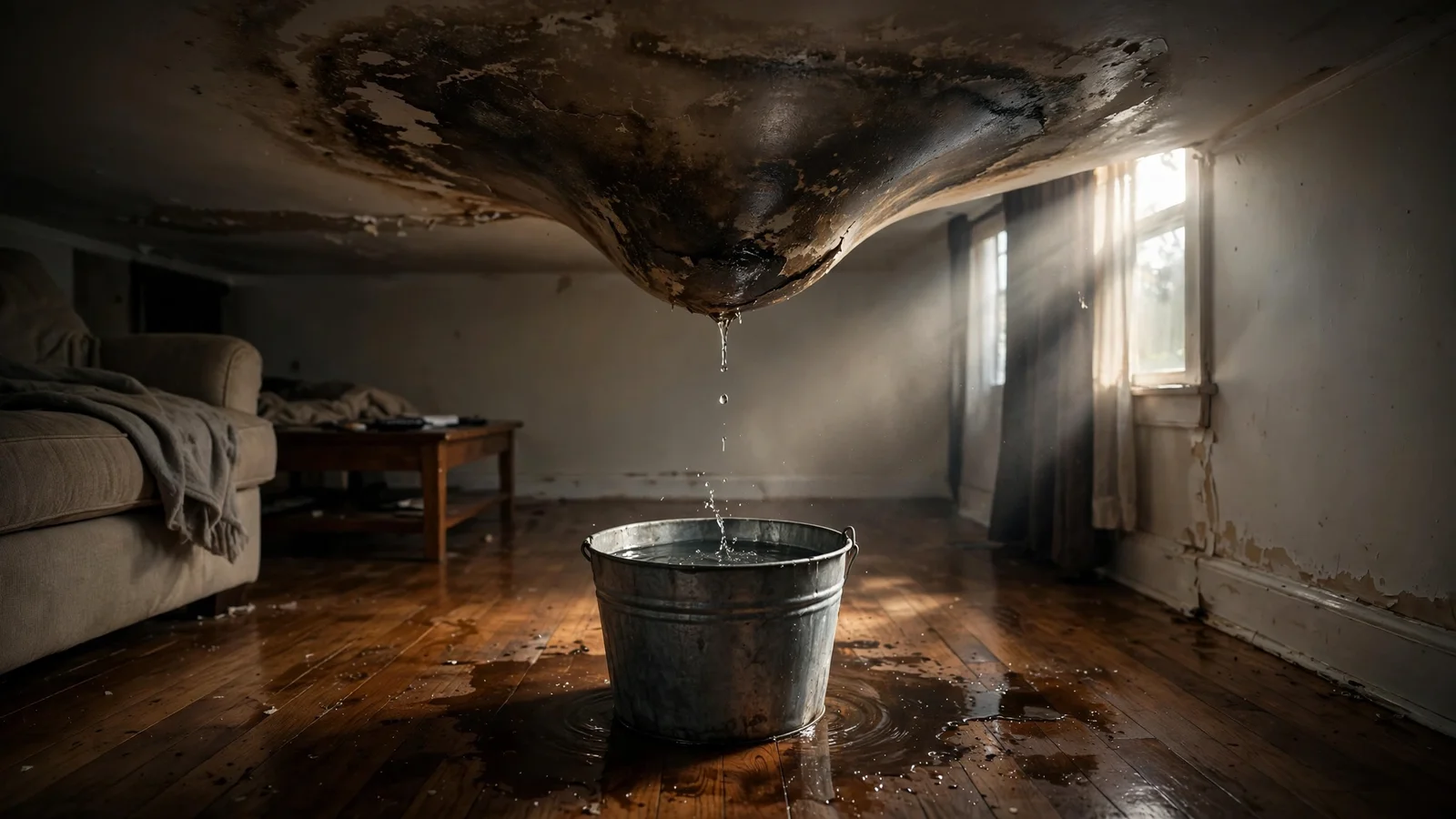
Signs of a hidden pipe leak
- A water bill climbing month over month with no change in your usage
- A musty, damp smell near plumbing walls, cabinets, or the basement
- Water stains on ceilings or walls that slowly grow or darken
- Paint bubbling, drywall softening, or baseboards warping near the floor
- The sound of water running when all fixtures are off
- Warm spots on a floor — a sign of a hot-water line leaking in or under the slab
How your provider finds and repairs leaks
1. Confirm and isolate the leak
Your provider checks the meter and the fixtures to confirm there is a leak and narrow it to a branch of the system — hot or cold, upstairs or down, inside or out. Half the diagnosis is ruling out what it isn't.
2. Pinpoint it without tearing the house apart
Moisture meters map the wet area and acoustic equipment listens for the escape point along the line. Your provider marks the spot and explains the access plan before anything is opened.
3. Repair the failed section
The opening stays as small as the work allows. The failed pipe, fitting, or joint comes out and new material goes in — and if the surrounding pipe tells a bigger story, you hear that now, not next year.
4. Verify and document the dry-out
The repair gets tested under pressure, and your provider walks you through what's wet, what needs to dry, and what to watch. Trapped moisture left behind is how a leak repair turns into a mold call.
Pipe leaks in Littleton homes
Littleton's leak profile splits by era. The historic homes near downtown run galvanized and early copper lines that corrode from the inside — pinhole leaks are their signature, usually in walls and crawlspaces where they can run for a season unnoticed. The mid-century neighborhoods add slab plumbing to the mix, where a leak under the floor announces itself only as a warm spot or a climbing bill. In the newer subdivisions, leaks more often trace to fittings and remodel work. And across all of it, the foothills' shifting soils and freeze-thaw cycles stress joints year after year. Local plumbers know these patterns well — the housing tells them where to listen first. Seasonal soil movement helps explain why some Littleton leaks start slowly rather than suddenly. Expansive clay soils common along the Front Range swell as they take on snowmelt and irrigation water, then shrink back in dry spells. That repeated movement works on joints under slabs and through crawlspaces in mid-century ranch homes, loosening a fitting a little at a time. The result is often a leak that wets soil or subfloor for weeks before any stain, smell, or meter change points to it indoors.
Need pipe leak repair in Littleton?
One call connects you with a local technician. No forms.
(555) 234-5678📞 Call Now